p. 08
She was born in a village where the call to prayer arrived before the sunrise and the dust never fully settled. The village sat in the southern curve of Ningxia, pressed between a ridge of dry mountains and the Yellow River's westernmost bend, and it had been Hui Muslim for as long as anyone alive could remember. Her mother named her Ailiqun, but the first two syllables, Aili, came from the Arabic word for moonlight, and her mother pronounced it the Mandarin way, so the word landed softer, like a coin dropped on silk.
Her father was Han Chinese from Jiangsu province. He had come west for construction work and met her mother at a roadside noodle shop where the broth was lamb and the radio played Cantonese pop and nobody asked where you were from if you paid in cash. Her mother's family had forbidden the marriage. A Hui woman does not marry a Han man. The imam was consulted. The elders convened. Her mother married him anyway, on a Tuesday afternoon in a government office forty minutes from the village, wearing a cotton dress she had sewn herself. There was no banquet. There were no guests. The family did not speak to her for two years.
Ailiqun grew up toggling between two calendars. On Fridays she went to the mosque with her grandmother. On Mondays she went to school with Han children who could not pronounce her name. She learned early that identity was not a fixed thing but a performance that shifted depending on who was watching, and that the performance had consequences. When the school registered her ethnicity as Hui, she received a bonus on her college entrance exam score. When her classmates learned she was Hui, they asked her if she ate pork, and then they asked her again, and then they stopped inviting her to lunch.
She was a quiet child. Not shy, exactly, but trained in the particular silence of children who know that the wrong sentence in the wrong room can cost more than they are able to pay. She watched. She memorized. She learned the geography of who was allowed to say what and where and when. She understood, before she had the language for it, that silence was not the absence of speech but a form of labor, and that some people worked at it much harder than others.
Her parents left when she was fourteen. They followed the construction money east to Jiangsu, where her father had a cousin who ran a tiling crew. They would send cash every month. She would stay with her maternal grandparents and finish middle school. It was the logical arrangement. Millions of families across rural China did the same thing. The child stays. The parents go. Everyone pretends the distance does not matter.
For the first year, the arrangement worked. Her grandmother fed her lamb stew with hand-pulled noodles. Her grandfather walked her to school in the mornings and quizzed her on arithmetic. She did well. She was polite. She kept her head down in the way that girls in that village were expected to keep their heads down, which is to say she made herself small enough to avoid attention but competent enough to be useful.
The trouble began so quietly she almost missed it. Relatives she had never met started visiting the house. They drank tea in the front room with her grandparents. They looked at her. Not at her face, exactly, but at the shape of her, the way a tailor looks at fabric before making a cut. Her grandmother started commenting on her posture, her weight, the condition of her skin. You are getting tall. You should eat more. Your face is clearing up nicely.
She did not connect these observations. She was fifteen. She was thinking about exams.
It happened on a Thursday in early winter, the year she turned sixteen. She came home from school and found the house transformed. There were people everywhere. Women she recognized vaguely as distant aunts were arranging food on tables she had never seen before. Her grandmother was wearing her best clothes. The air smelled of cardamom and fried dough and something sweet she could not name.
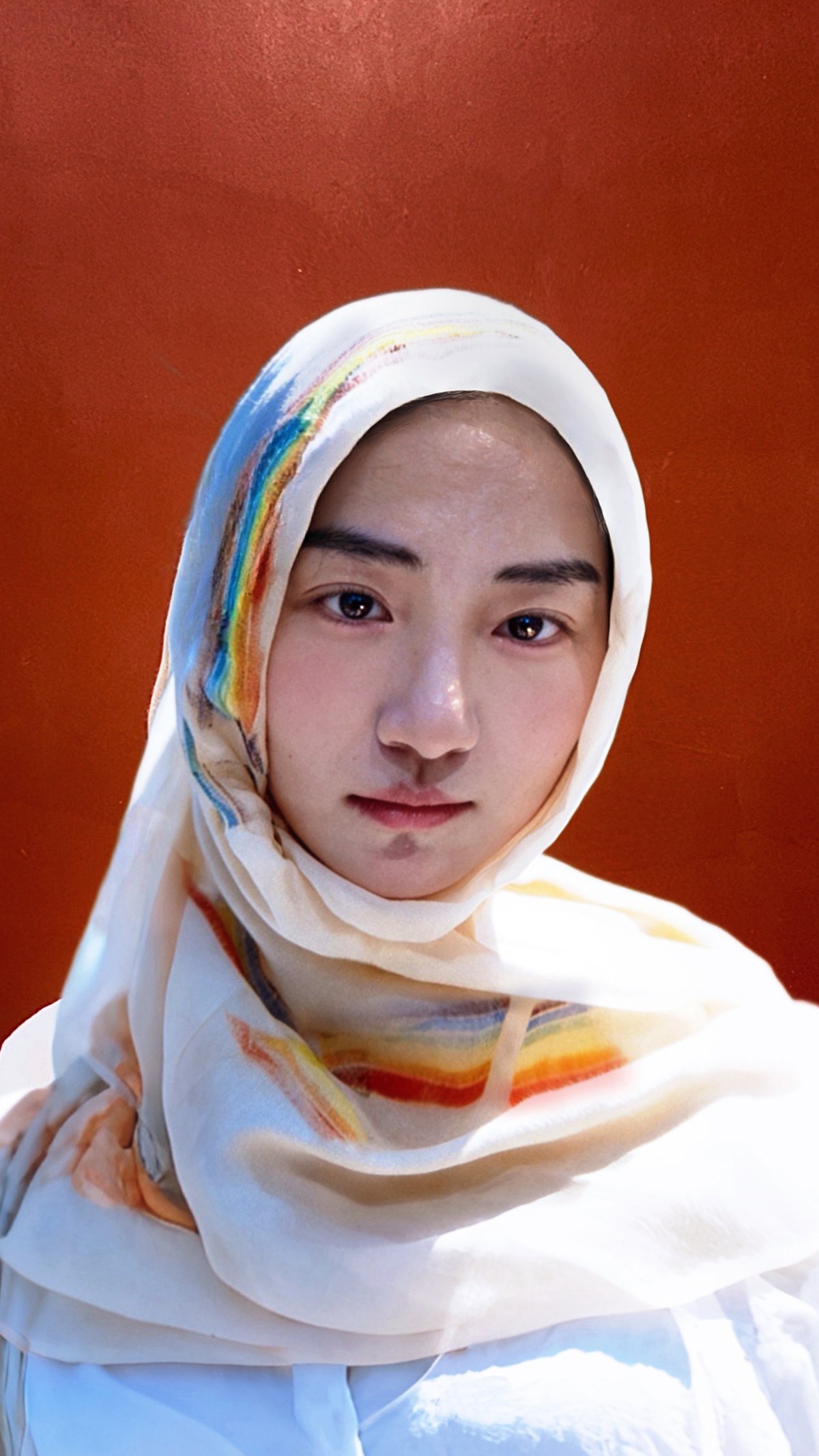
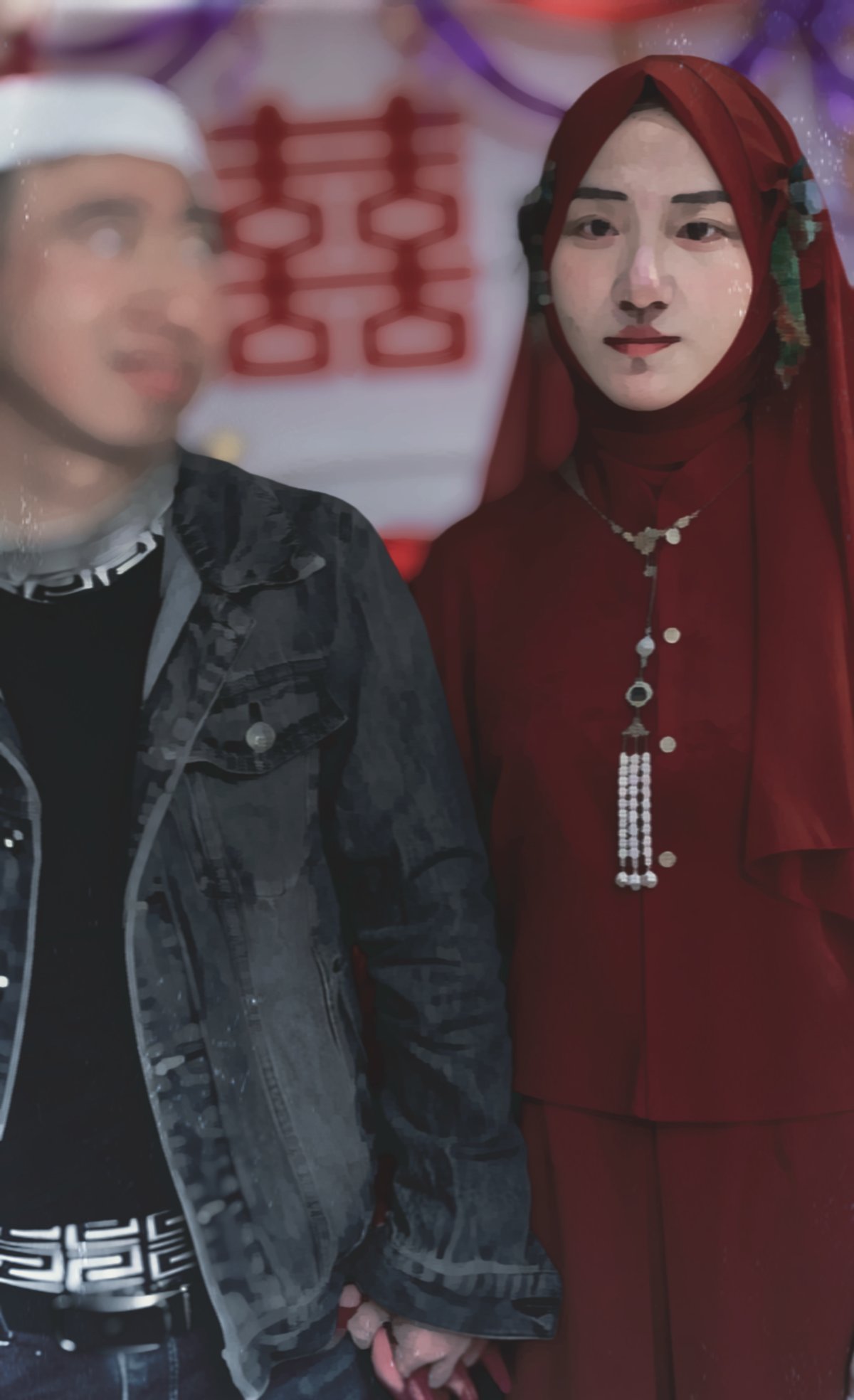
Her grandmother took her hand and led her to a back bedroom where a white dress had been laid across the bed. Beside it was a hijab, folded in a precise triangle, the fabric so new it still held the creases from the package. Her grandmother told her to put it on.
She asked what was happening.
Her grandmother said: You are getting married. His family is good. He is a good boy. Your grandfather has spoken with the imam. It is all arranged.
Ailiqun stood there. She was sixteen years old. She had a math test the next morning. She had not finished the practice problems. Her backpack was still on the kitchen table.
The nikah happened that evening. An imam she did not know spoke words she did not fully understand. She was veiled. She stood where they told her to stand. She sat where they told her to sit. Later, she was led into a room with a bed she had never seen, in a house she had never visited, belonging to a family whose name she learned that day. The door closed behind her.
What happened next is the part she does not tell in public, not because it is unspeakable but because the people who need to hear it are not yet ready to listen. What she says is this: the room was very quiet. The quilt was red. She could hear voices on the other side of the door, the muffled celebration of adults who believed they had done something good.
She did not sleep. She sat on the edge of the bed and thought about her mother.
The next morning, a girl who worked in the kitchen of the groom's family brought her tea. Ailiqun asked if she had a phone. The girl looked at the door, then back at Ailiqun, and pulled a phone from her apron pocket. It was an older model, cracked across the screen, the kind of phone you could buy at a market stall for fifty yuan.
Ailiqun hid it inside her sleeve. She waited all day. She smiled when the family smiled at her. She ate the food they gave her. She said thank you. She said the rice was good. She said she was happy.
That night, after the house fell silent, she pulled the phone from under her pillow and dialed her mother's number. She had memorized it when she was nine years old, reciting it in the bathtub like a prayer, because even then she had understood, in some wordless way, that there might come a time when she would need to call and there would be no phone book and no address and no one to ask.
Her mother answered on the fourth ring. Ailiqun whispered. She said: They married me. You have to come.
She heard her mother start to cry, and then she heard her mother stop crying, and then she heard her mother say something to her father in a voice that was not sad but very, very sharp.
Her parents arrived the next evening. They drove through the night. Her father did not speak. Her mother walked into the groom's family's house and said, in a voice steady enough to cut glass: We are taking our daughter home.
There was no negotiation. There was no scene. There was only her mother's hand on her elbow and the sound of a car door opening and the highway unreeling beneath them like a sentence that had finally found its period.
They enrolled her in a school in Nanjing where nobody knew her name. She was a transfer student from the west, a girl with an accent she was already learning to lose. She told no one what had happened. She buried it the way you bury something you are not ready to hold, pressing it deep into the soft ground of daily life, covering it with homework and new friendships and the noise of a city where the call to prayer never came.
Nanjing was enormous and indifferent and exactly what she needed. The indifference of a large city is a kind of freedom. Nobody watched. Nobody measured the shape of her body. Nobody asked if she was old enough to marry. She bought her own lunch. She walked to school alone. She stayed up late reading novels on her phone. These were small liberties, but to a girl who had been placed inside a house she did not choose, wearing clothes she did not select, sitting on a bed she did not want, they felt like acts of revolution.
The first winter in Nanjing, she discovered the public library on Zhongshan Road. It was a building from the Republican era, with high ceilings and windows that let in long rectangles of afternoon light. She went there every day after school, not because she needed to study but because the silence in a library is different from the silence in a village. Library silence is chosen. It belongs to the person sitting inside it. Nobody is keeping you quiet. You are keeping yourself quiet because you want to, because the book in your hands matters more than anything you could say out loud.
She read everything. Psychology textbooks she half understood. Translated novels from writers whose names she could not pronounce. Memoirs by women who had survived things she recognized but had never seen described in print. She was building a vocabulary for her own experience, word by word, the way you furnish an empty room one object at a time until it starts to feel like a place where someone actually lives.
Her mother called every Sunday evening. The calls followed a pattern. Her mother asked about school. Ailiqun said school was fine. Her mother asked about food. Ailiqun said the food was fine. Neither of them mentioned the village. Neither of them mentioned the nikah. The silence between them was not hostile. It was protective, the kind of silence two people maintain when they have agreed, without ever discussing it, that the wound is too fresh to touch.
In her second year in Nanjing, she fell in love with a girl in her English class. The girl's name was Meng and she had short hair and a laugh that sounded like someone had dropped a handful of coins on a wooden table. They sat next to each other during study hall. They passed notes. The notes became longer. The longer notes became confessions.
Ailiqun had liked boys before. She had also noticed girls before. But the feeling she had for Meng was the first one she could not explain away as friendship or admiration or proximity. It was desire, clean and terrifying, and it arrived at the exact intersection of two impossibilities: the Hui Muslim framework that called it sin, and the memory of a marriage that had taught her what it felt like when someone else decided who you loved.
She told no one. She added this silence to the other silence, the one about the nikah, the one about the village, the one about the red quilt and the cracked phone. She carried them all, stacked like books in a bag that nobody could see, and she carried them anyway, because she did not yet know that there was another option.
With Meng, the relationship lasted eight months before it ended the way that first relationships between two closeted teenagers in a conservative city tend to end: Meng's parents found a note, and Meng told them it was a joke, and the next week Meng asked to switch seats in study hall. They did not speak again. Ailiqun understood. She did not blame Meng. She blamed the architecture of the world they lived in, which had been designed so precisely that two girls who cared about each other could be separated by a single sheet of paper discovered in the wrong pocket.
She graduated near the top of her class, but the weight of everything she carried caught up with her that summer. After the gaokao she stopped sleeping. Then she stopped eating. Then she stopped leaving her room. Her mother came to Nanjing and found her sitting on the bed in the dark, not crying, not speaking, just sitting, the way she had sat on a different bed in a different room three years earlier. The doctor called it depression. Ailiqun called it the bill arriving for years of silence.
She took a gap year. She did nothing that could be written on a resume and everything that needed to happen inside a body that had been running on discipline instead of oxygen. She slept. She walked along the Qinhuai River in the early mornings when the city was still quiet and the water reflected the sky in long silver streaks. She read novels that had nothing to do with exams. She wrote in a notebook that nobody would ever grade. Slowly, unevenly, the way a bone knits itself back together, she healed.
The following year she retook the gaokao and enrolled at Hainan University's joint program with Arizona State University. She had chosen it deliberately. She wanted the bilingual structure, the American faculty, the classrooms where half the reading list was in English and half the discussion happened across cultures. She wanted to learn how ideas traveled between systems, how a concept that made sense in one language could fracture or transform when carried into another. She wanted international exposure not as a credential but as a practice, because she had already lived the experience of existing between two worlds and she wanted to understand it with the same precision she brought to everything else.
After Hainan she moved to Beijing, where the distance between herself and the village finally became geographical as well as emotional. She carried the silences with her the way you carry a language you no longer speak but still dream in. The silence about the nikah. The silence about Meng. The silence about the red quilt and the cracked phone and the borrowed light of a name she was still learning to reclaim.
It was in Yunnan that the silences found their echo. She had traveled to Lugu Lake for work, and after the official business was done she stayed. She sat on the steps of a guesthouse in the evenings and waited, because she had learned, from her own childhood, that the things people cannot say in front of others are the things that matter most.
It was on one of those evenings that a Mosuo grandmother found her. The old woman sat down beside her, took her hand, and whispered about the condition she had carried for years but would never let a doctor see. At my age, the grandmother said, if they find something like that, the whole village laughs. A woman does not survive the laughter. A woman survives the pain. It was the grandmother's hand, dry and trembling and warm, that finally broke something open inside Ailiqun that she had not known was still sealed.
The option arrived in 2022, not as a plan but as an accident. She was sitting in her apartment in Beijing, scrolling through Xiaohongshu at midnight. She saw a post from a woman her age who wrote about her depression in language so clinical it felt like a medical chart wearing a dress. Five symptoms. Three treatment options. A cheerful conclusion. The post had ten thousand likes and not a single comment that sounded like it came from a person who had actually been depressed.
She put the phone down and opened her laptop and started typing.
She did not write about diagnosis. She wrote about the feeling of sitting in a room where every adult believes they are doing the right thing. She wrote about the weight of a hijab placed on a head that did not consent. She wrote about the mathematics of silence, the way a body learns to calculate which truths are worth the cost and which truths must be swallowed whole. She wrote in the simplest Mandarin she knew, the kind of language a child would use, because she had been a child when it happened and the child deserved a voice she had never received.
She wrote for three hours without stopping. She did not outline. She did not edit. She let the words come the way water comes when you finally remove the stone that has been blocking the pipe. When she finished, the document was eleven hundred characters long and contained no clinical terminology, no diagnostic framework, no five-step recovery plan. It was simply a girl describing what it felt like to be inside a room she did not choose, wearing clothes she did not select, listening to adults celebrate a decision she had never been consulted about.
She hit publish at two in the morning. She closed the laptop. She went to sleep expecting nothing.
By noon the next day, her inbox held four hundred messages. Most of them said some version of the same thing: I thought I was the only one. A woman in Gansu wrote that she had been married at fifteen and had never told anyone. A teenage boy in Qinghai wrote that he was gay and Muslim and saw no way out. An elderly woman in Hunan wrote a single sentence: My husband is dead and I am finally allowed to say that he hurt me.
Ailiqun read every message. She read them on the subway, tilting her screen away from the strangers pressed against her shoulder. She read them in the bathroom at work, sitting on the closed lid of the toilet with her shoes pulled up so nobody would know she was there. She read them at her desk with her hand over her mouth because some of them made her cry, and she was not the kind of person who cried in public. She read them until her eyes burned and then she read more.
She wrote another entry the next night. And another the night after that. She wrote about the Mosuo grandmother in Yunnan who would rather die of an untreated condition than visit a clinic. She wrote about a pharmacist in Anhui who had told her that she deliberately avoided certain subjects with elderly patients because raising them meant losing the patient entirely. She wrote about the Hui matchmaking customs she had witnessed growing up, where young brides surrendered reproductive autonomy before the wedding because asking about contraception would mark them as impure.
She called these pieces emotion diaries. The name was deliberate. She wanted them to feel like pages torn from something private and handed to a stranger on the street. She wanted readers to feel the intimacy of trespass, the vertigo of reading something that was not meant for them but was somehow exactly about them. She wanted the clinical distance of psychology to collapse. She wanted readers to feel what it was like to be inside a condition, not looking at it from the safe distance of a textbook.
The numbers grew. Tens of thousands of reads. Thousands of comments. Women in rural China who had never spoken about their own health writing paragraphs in her comment section. Queer teenagers in conservative provinces sharing her posts in private group chats. Pharmacists and nurses writing to say they recognized their own patients. The pattern was always the same: the clinical language of psychology kept people at arm's length, but the language of a body describing its own experience pulled them in.
She began to understand something about the relationship between narrative and health. A fact informs. A story inhabits. The brain processes a statistic and files it away, but the brain processes a story and rehearses it, running the same circuits it would use if the events were happening to the reader in real time. She was watching it happen in her own comment section. Women who had read her diary entries about silence were scheduling doctor's appointments for the first time in decades. Teenagers who had read her entry about the mosque and the rainbow were choosing to stay alive.
She was not writing therapy. She was not writing journalism. She was doing something she did not yet have a name for, something that sat at the intersection of public health and personal testimony, something that used the machinery of storytelling to reach the people that every other system had failed.
She went home to Nanjing for Spring Festival the year she turned twenty-four. Her parents looked older. The apartment looked smaller. The city looked exactly the same, which was a comfort and also a sadness, because she was not the same and she could feel the mismatch pressing against her skin like a coat she had outgrown.
Over dinner, after the dumplings and before the fruit, she told her parents two things. The first was that she was pansexual, a word she had to explain three times before her father stopped confusing it with bisexual and her mother stopped pretending it was a phase. Her mother listened with her hands folded on the table. She did not cry. She said: I knew something. I did not know the word. Her father said nothing for a while, then asked if she was safe, and when she said yes, he picked up his chopsticks and resumed eating, which was, she understood later, his way of saying he accepted it.
The second thing she told them was harder. She wanted to change the family's ethnic registration from Hui to Han.
Her father set down his chopsticks again. Her mother looked at the table. The room was very quiet. Through the wall she could hear the neighbor's television broadcasting the CCTV Spring Festival Gala, the same program that played in a hundred million living rooms that night, the same program that acknowledged no community she belonged to.
She explained. She was not abandoning her heritage. She was not ashamed of the mosque or the language or the food her grandmother made. She was reclaiming the right to define her own relationship to that identity, outside the framework of a community that had married her off at sixteen and a religious structure that condemned the desire she had finally learned to name. She was not erasing the moonlight. She was choosing where it fell.
Her mother was quiet for a long time. Then she said something Ailiqun had not expected. She said: I married your father against my family's wishes. I chose him. I lost two years with my mother because I chose him. Changing the registration is your version of what I did. I understand it. I just need a moment.
The paperwork took three months. It required visits to the local government office in Nanjing's Qinhuai District, the kind of windowless room where forms are filled out in triplicate and nobody makes eye contact. It required her parents' signatures on a form labeled "Application for Voluntary Change of Ethnic Classification." It required a stated reason, which she wrote in a single sentence: personal choice. The clerk read it, stamped it, and put it in a pile without looking up.
When the new household registration booklet arrived by mail, she sat on her bed and opened it. Han. The character sat on the page, two strokes, and it meant nothing more or less than this: she had held the pen.
She is twenty-five now. She lives in Beijing, in a fourth-floor walkup near Guomao where the light comes in sharp through east-facing windows and the subway rumbles beneath the floorboards at seven-minute intervals. She still writes the emotion diaries. They have become something larger than she intended, a body of work that sits at the intersection of personal testimony and public health. She does not write them as a survivor. She writes them as a practitioner. The difference matters. A survivor speaks from the wound. A practitioner speaks from the discipline of turning the wound into something that can be used.
A fifty-eight-year-old woman in Shaanxi read her diary entry about the Mosuo grandmother and, for the first time since her husband's death, scheduled a gynecological exam. A seventeen-year-old boy in Gansu read her entry about the mosque and the rainbow and wrote to her that he had been planning to kill himself that week but had decided to wait. He is still alive. He writes to her sometimes. His messages are short and they always end the same way: thank you for going first.
She goes by Ayla now. It is another way to spell the Aili inside Ailiqun, the syllables her mother buried in her full name like a coin sewn into the lining of a coat. The one that means moonlight in Arabic. She chose this spelling herself. Nobody arranged it. Nobody required it. She chose it the way her mother chose her father, the way her mother walked into that government office wearing a cotton dress and signed the paper that made her a wife against her family's will. The act of choosing, she understands now, is genetic. It runs in the women of her family like a recessive trait that surfaces when the pressure is high enough.
Moonlight does not generate its own light. It catches what the sun throws off and carries it into the places the sun cannot reach. The places where people sit alone with conditions they cannot name, in rooms where the door is closed and the silence is so complete it starts to feel like a wall.
She knows what it is to sit in a room like that. She knows what it is to dial a phone in the dark, not knowing if anyone will pick up, not knowing if the voice on the other end will be angry or afraid or both. She knows what it is to borrow someone else's light and aim it at the places nobody wants to look.
Her mother called last week, on a Sunday evening, the way she has called on Sunday evenings since Ailiqun was sixteen and living in Nanjing. The conversation followed its old pattern: school, food, weather. But at the end, before hanging up, her mother said something new. She said she had been reading the emotion diaries. She said she had recognized herself in the entry about the Mosuo grandmother, not because she had ever been sick, but because she understood the arithmetic of silence, the calculation a woman makes when she weighs what she can afford to say against what she can afford to keep hidden.
Then her mother said: I think you are doing the right thing. I think you are doing what I would have done if I had known how.
Ailiqun sat in her apartment in Beijing, holding the phone, listening to her mother breathe on the other end of the line. The light from the east-facing window had turned the color of amber. The subway rumbled beneath the floor. Somewhere, in a village in Ningxia that she has not visited in nine years, the call to prayer was beginning.
The moonlight is still there. It simply belongs to her now.